

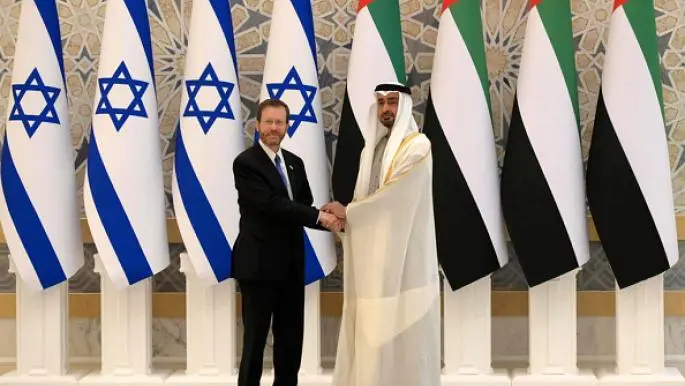
The United Arab Emirates is increasingly at odds with a shifting Middle Eastern landscape, as its alignment with the US-Israeli axis contrasts with a growing regional push toward de-escalation and independent diplomacy.
While several regional powers are prioritising cooperation and conflict resolution, Abu Dhabi appears to be operating within a narrowing strategic space. Analysts warn this position could lead to political and economic consequences, as well as strained ties with key regional actors.
At the same time, a new bloc is emerging, signalling a broader transformation in how influence is exercised in the region. Power is no longer defined solely by military strength or external alliances, but by the ability to mediate conflicts and foster stability.
Recent statements from Pakistan highlight this shift. Officials indicated the formation of a coordinated alliance involving countries such as China, Saudi Arabia, Egypt, Turkey, and Qatar—a group combining economic power, political influence, and mediation expertise.
China is seen as a key pillar due to its global economic role, while Saudi Arabia and Egypt provide political weight within the Arab world. Turkey contributes growing military capabilities, and Qatar brings extensive mediation experience. Pakistan, hosting anticipated US-Iran talks, positions itself as a central facilitator within this framework.
Pakistani Defence Minister Khawaja Asif recently issued strong criticism of Israel, reflecting wider regional tensions. Meanwhile, diplomatic signals from Islamabad suggest that regional actors are increasingly capable of managing crises without reliance on Western-led frameworks.
This development coincides with efforts to reduce tensions between the United States and Iran, with mediation reportedly helping to prevent broader escalation and stabilise key areas, including international shipping routes.
Analysts believe this signals the gradual emergence of a new regional security order—one rooted in cooperation and supported by China, rather than dominated by external powers.
Within this evolving landscape, the UAE risks diminished influence if it fails to adapt. As the new alliance consolidates, its ability to shape regional outcomes may decline, raising questions about its future role.
The shift marks a significant turning point: the Middle East is moving toward greater regional autonomy, with local actors increasingly taking the lead in shaping political and security dynamics.
