

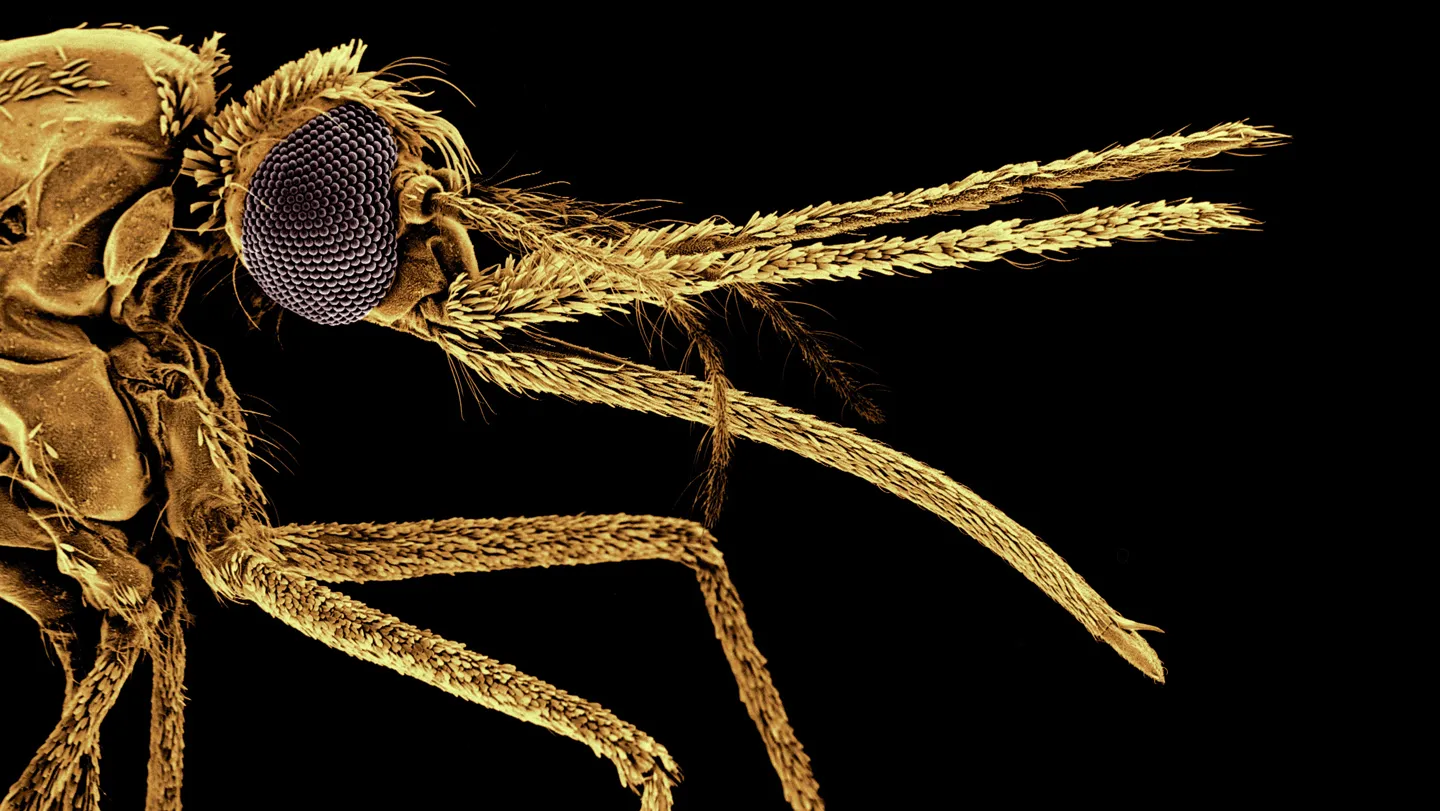
Mosquitoes have been biting people for more than a million years and probably much longer.
An analysis of 38 modern mosquitoes’ DNA suggests an ancestral mosquito species developed a preference for feeding on early humans between 2.9 and 1.6 million years ago, researchers write February 26 in Scientific Reports.
The team studied 11 mosquito species from the Anopheles leucosphyrus group, chosen because they gave a good overview of the entire group’s genetics. Some species were “anthropophilic” mosquitoes — human feeders — including Anopheles dirus and Anopheles baimaii, both of which spread malaria, while others fed only on nonhuman primates (mostly monkeys) or on both.
Mosquitoes have been biting people for more than a million years and probably much longer.
An analysis of 38 modern mosquitoes’ DNA suggests an ancestral mosquito species developed a preference for feeding on early humans between 2.9 and 1.6 million years ago, researchers write February 26 in Scientific Reports.
The team studied 11 mosquito species from the Anopheles leucosphyrus group, chosen because they gave a good overview of the entire group’s genetics. Some species were “anthropophilic” mosquitoes — human feeders — including Anopheles dirus and Anopheles baimaii, both of which spread malaria, while others fed only on nonhuman primates (mostly monkeys) or on both.
Before humans arrived, the mosquitoes had fed exclusively on the blood of nonhuman primates in the rainforest canopy. This was the insects’ “ancestral behavior,” and previous studies indicate biting nonhuman primates began more than 3.6 million years ago.
Archaeologists still debate when the first human ancestors from Africa spread into Asia. But the new study of mosquito genetics independently suggests that the movement happened around 1.8 million years ago, and it matches a recent study that dates the oldest Homo erectus skulls in China to about the same time.
H. erectus must have lived in Southeast Asia in large numbers to drive the mosquitoes’ biting adaptation, which seems to have been based on the early human’s unique odor. “You need an abundance of Homo erectus to really get an evolutionary change taking place,” Walton says.
And while only about 100 of the estimated 3,600 modern mosquito species have evolved to bite humans, the insects have been ruining quiet evenings ever since.
